
Guides · Old town · Verified 23 November 2026
Macau's churches and chapels: the sacred trail through the old town
Published 23 November 2026
Macau holds one of the densest collections of historic Catholic churches in Asia, and they were built as a system: a harbour church for sailors' families, a seminary church for training priests for China and Japan, a Dominican church by the market square, and chapels on the two hills that guarded the town. This guide walks them as one sacred trail through the old town, from St Lawrence's in the south to the Ruins of St Paul's and the Guia Chapel, then out to the island churches of Taipa and Coloane, explaining what each building was for and what to look at inside.
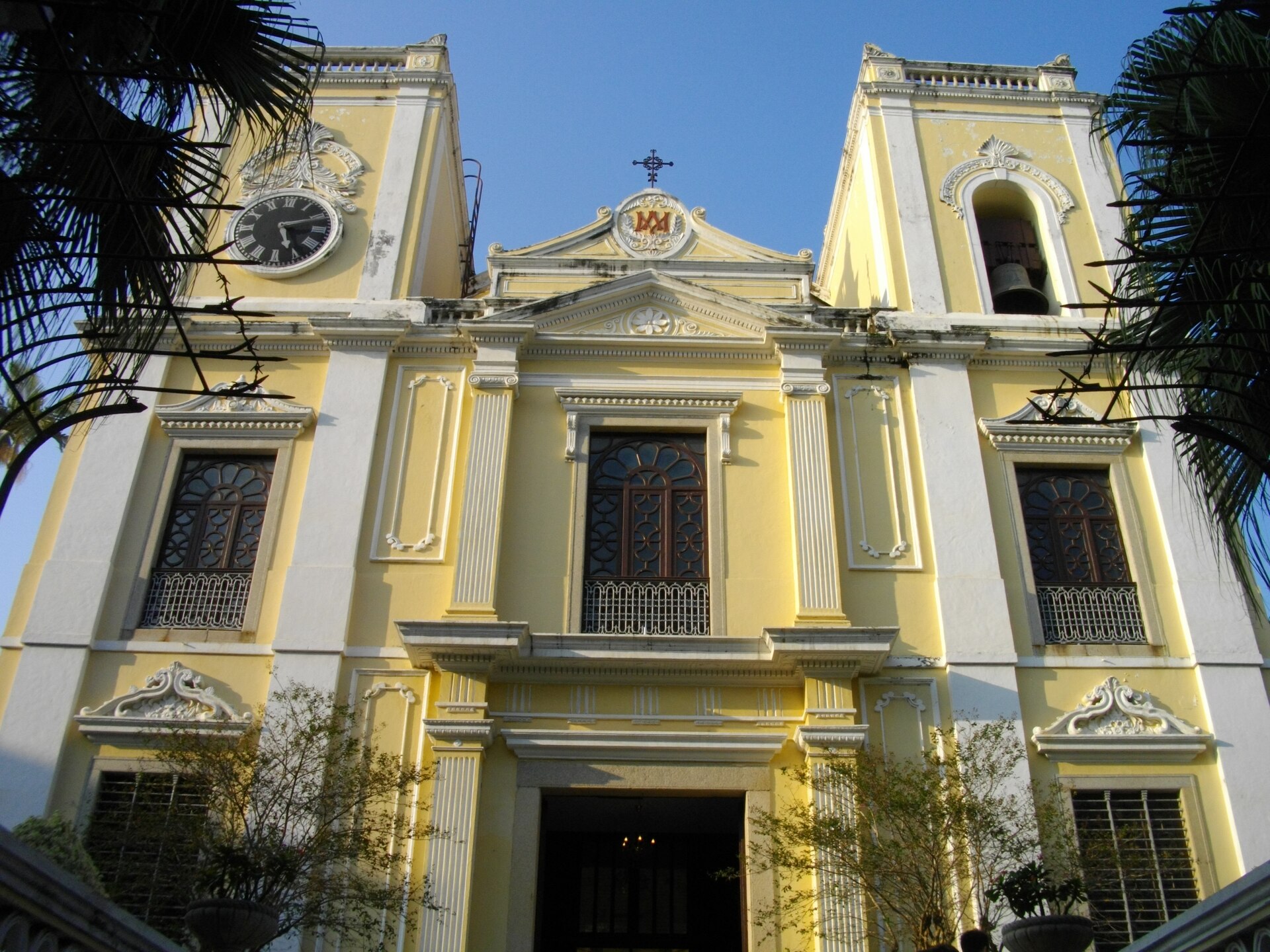
- The start
- St Lawrence's, the harbour families' church, one of the three oldest churches in Macau
- The mission
- St Joseph's Seminary, established 1728, and St Augustine's, home of the Bom Jesus procession
- The climax
- The Ruins of St Paul's: the church of 1602 to 1640, its facade left by the fire of 1835
- The hills
- The Penha Chapel and the Guia Chapel, beside the Guia Lighthouse of 1865
- The coda
- Our Lady of Carmel in Taipa and St Francis Xavier in Coloane, 1928
Stand in Senado Square and you are never more than a few minutes' walk from four centuries of churches. Macau was the Catholic beachhead of East Asia, the port from which missions set out for China and Japan and to which their letters, relics and horror stories returned, and the Portuguese town built its faith into the street plan: parish churches for the settlers, a seminary for the mission, chapels on the hills for the garrisons and the sailors. The Historic Centre of Macao, on the UNESCO World Heritage List since 2005, protects twenty two buildings and eight squares, and the churches are its spine. Our UNESCO heritage walk walks the whole route; this guide walks only the sacred buildings, in an order that tells their story, and it is the mirror image of this week's temple trail. These are working churches, so everything below comes with one standing condition: services come first, hours flex around them, and a closed door on the day is part of the reality of visiting living buildings rather than museums.
St Lawrence's: the harbour families' church
Start in the south, on the slope above the inner harbour, where St Lawrence's Church stands behind its double staircase and its garden of palms, the facade in the hero photograph. Founded by the Jesuits in the mid sixteenth century and rebuilt in stone and later in its present neoclassical form, St Lawrence's is one of the three oldest churches in Macau, and its congregation tells you its job: this was the church of the harbour's prosperous merchant families, close to the water and to the old Praia Grande world. The dedication gives the church its local meaning. St Lawrence is the patron invoked for fair weather and safe seas, and the families of Macau's sailors prayed here for men at sea, which earned the church its Chinese name, the Hall of the Favourable Wind. Inside, look for the high, calm nave, the wooden ceiling and the stained glass, and notice how unhurried the building feels compared with the old town's more famous stops. It is the trail's best beginning precisely because it is the one the tour groups reach last.
St Joseph's Seminary and St Augustine's: the mission's engine room
A short walk north brings the trail to the buildings that made Macau matter to the wider Catholic world. St Joseph's Seminary, established in 1728, trained priests for the missions of China and beyond, and its church, completed in the following decades, is the old town's grandest interior after St Paul's: a baroque space built on an oval plan, crowned by a dome that was among the first of its kind in the region. The seminary's museum, the Treasure of Sacred Art, holds the mission's material memory, paintings, ivory carvings, liturgical gold and silver, and the relic tradition that tied this small port to the martyrs of Japan and Vietnam. Published listings put the church's visiting hours at 10am to 5pm, but treat the seminary complex as the trail's most variable stop and check on the day.
Around the corner on its own small square, St Augustine's Church carries a different devotion. Founded by Spanish Augustinians at the end of the sixteenth century, the church is the home of the Bom Jesus image and the starting point of Macau's oldest Lenten procession, the Passion of Our Lord, the City's great act of public faith, when the image is carried through the old town streets. Even outside procession season the square is worth the pause: theatre, library and church in one small ensemble, and a reminder that the orders, Jesuits, Dominicans, Augustinians, Franciscans, each planted their own flag in this small town and competed in architecture as in theology.
St Dominic's: the church by the market
Down the hill at the edge of Senado Square stands the trail's most visited working church. St Dominic's, founded in 1587 by three Spanish Dominican priests, wears Macau's most recognisable church facade after St Paul's, a warm yellow baroque front on its own square, and its bell tower now houses the Museum of Sacred Art, with a collection of some three hundred pieces of religious art and artefacts gathered from the territory's churches. The position is the point: the Dominicans built beside the market and the square, in the middle of the town's commercial life, and the church has been part of the daily round ever since. One caution belongs in any guide this year: St Dominic's has had a maintenance programme during 2026, as our UNESCO walk notes, so treat interior access as a bonus on the day rather than a promise, and enjoy the square and the facade, which need no ticket and no scaffolding free hour, regardless.
The Cathedral and St Anthony's: parish and first church
The Cathedral of the Nativity of Our Lady, the Sé, on Cathedral Square a few lanes east, is the diocese's seat and the old town's parish anchor, rebuilt in its present form in the nineteenth century on a site with a much longer church history. It is plainer than its neighbours and more used, which is its character: baptisms, weddings and funerals for the Portuguese and Macanese community have run through this building for generations. North west of the square, St Anthony's Church stands on the site of one of the very first churches built in Macau, raised by the Jesuits in the first years of the settlement, and long the church where the Portuguese community celebrated its weddings, which earned it the local name of the Church of Flowers. Taken together the two show the parish system doing ordinary work while the mission churches did the extraordinary kind.
The Ruins of St Paul's and the two hill chapels
The trail's climax is a facade. The Church of St Paul, built between 1602 and 1640 beside the Jesuit college, was the largest Catholic church in Asia in its day, and after the fire of 1835 destroyed everything but the front, that front became Macau's emblem: a stone sermon in four tiers, carved by Japanese Christian craftsmen among others, mixing European orders with Asian motifs, a ship, a dragon, chrysanthemums, in a way no other building on earth quite does. Behind it, the Museum of Sacred Art and Crypt, in the college's old ground, holds paintings and the relics of martyrs, and the small Na Tcha Temple sharing its wall, covered in this week's temple trail, completes the scene. Go before 9am if you want the staircase to yourself.
Then climb for the chapels that guarded all of it. On Penha Hill, the Chapel of Our Lady of Penha, first built in 1622 by the crew of a ship that had escaped capture, and rebuilt in the nineteenth century, was the sailors' chapel, the first and last church many crews saw, and its hill gives the harbour view the whole trail has been circling. On Guia Hill, the Guia Chapel, built around 1622 inside the fortress, holds Macau's oldest frescoes and stands beside the Guia Lighthouse of 1865, the first modern lighthouse on the China coast. Our viewpoints guide ranks both hills for their views; on this trail they are the point where defence, navigation and prayer occupied the same few square metres.
The island churches: Carmel and St Francis Xavier
The trail's coda crosses the water. In Taipa Village, the Church of Our Lady of Carmel, the whitewashed parish church above the Taipa Houses, has served the island community since the nineteenth century, small, plain and still the village's own. In Coloane Village, the Chapel of St Francis Xavier of 1928, pale yellow on Eduardo Marques Square, carried the missionary's name to the island's fishing families, and once held a relic of the saint whose missions from this port the whole trail commemorates. Both appear in this week's village guides, and both make the same point as St Lawrence's did at the start: in Macau the sacred buildings were never monuments first. They were, and remain, the neighbourhood's front room.
A guided version of this old town exists for readers who want the churches and temples read together by a local, on the sightseeing route this site already carries.
And for walkers basing themselves in the old town, the small hotel by Guia Hill puts the trail's last chapel at the end of your street.
Walk the trail slowly, sit in at least one church simply to sit, and let the buildings explain what the casinos never mention: that this port existed, for most of its history, because of what these congregations were trying to do on the far side of the world.
Frequently asked
Are these churches still in use?
Yes. These are working churches, so services come first, hours flex around them, and a closed door on the day is part of visiting living buildings rather than museums.
What are the visiting hours for St Joseph's Seminary church?
Published listings put the church's visiting hours at 10am to 5pm, but treat the seminary complex as the trail's most variable stop and check on the day.
Can you go inside St Dominic's in 2026?
St Dominic's has had a maintenance programme during 2026, so treat interior access as a bonus on the day rather than a promise; the square and the facade need no ticket regardless.
When should you visit the Ruins of St Paul's?
Go before 9am if you want the staircase to yourself.
Church details from the UNESCO World Heritage Centre record for the Historic Centre of Macao and the churches' documented histories, verified November 2026. Photo: Abasaa, via Wikimedia Commons (public domain), the facade of St Lawrence's Church.