
Guides · Coloane · Verified 21 November 2026
Coloane: Macau's quiet island, village by village
Published 21 November 2026
Coloane is usually sold as a day trip checklist: statue, beach, egg tart, home. This guide slows it down and takes the island settlement by settlement: Coloane Village itself around Eduardo Marques Square, the Lai Chi Vun shipyards where Macau built its fishing fleet, the small eastern hamlet of Ka Ho, and the beach villages of Hac Sa and Cheoc Van, with the history that makes each one a different place rather than one long photo stop.
- The settlements
- Four: Coloane Village, Lai Chi Vun, Ka Ho, and Hac Sa with Cheoc Van
- The landmark
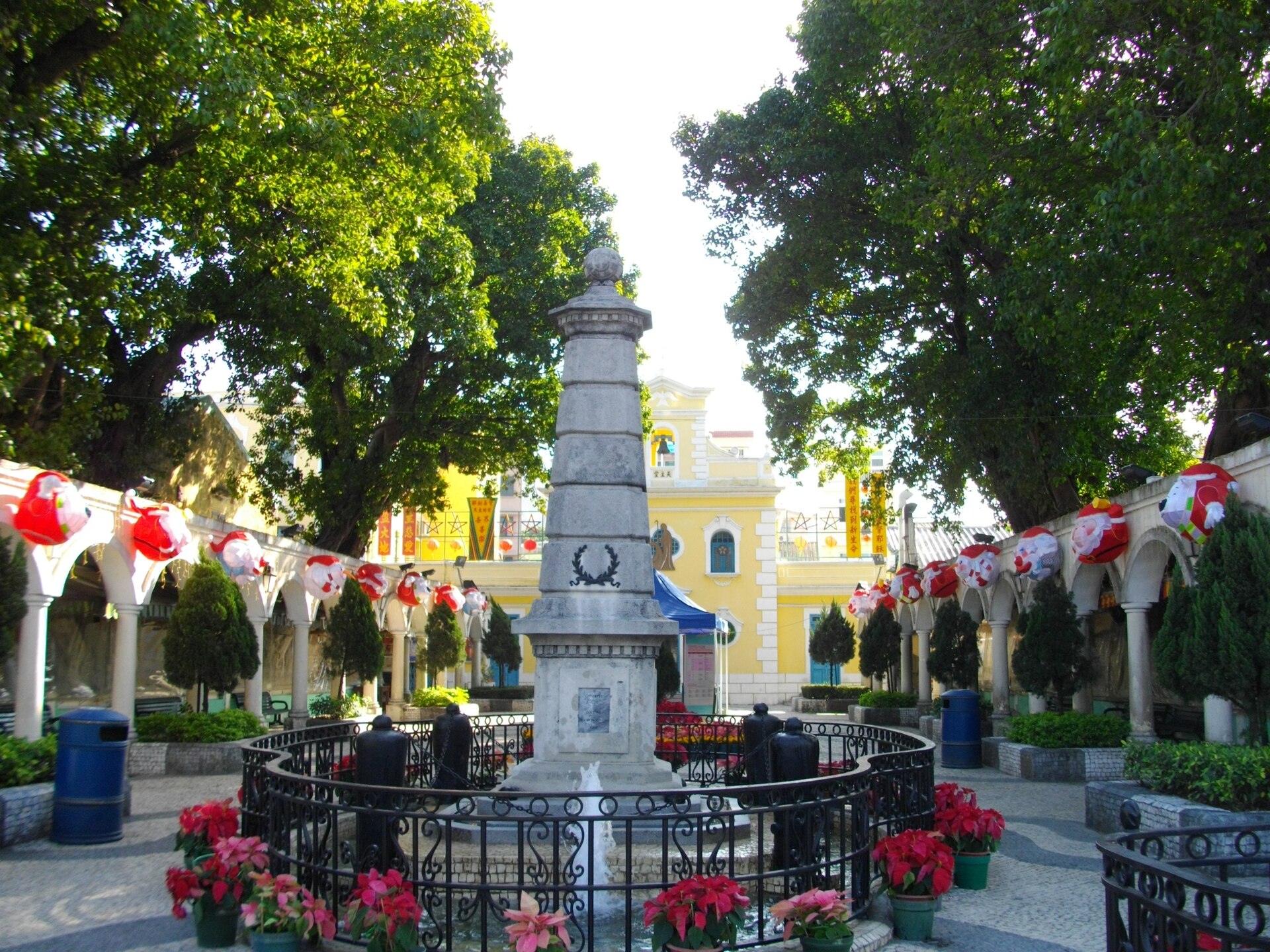
- Eduardo Marques Square and the Chapel of St Francis Xavier, built in 1928
- The history
- Lai Chi Vun, the only shipbuilding industry site in Macao to have survived relatively intact
- Getting around
- Buses 25, 26 and 26A link the peninsula, Cotai and the villages
Coloane is the island Macau forgot to pave. It is joined to Taipa now by the Cotai reclamation, so it is not technically an island any more, but the feeling survives the geography: cross the strip of casinos and the road narrows, the air changes, and within minutes you are in a landscape of villages, boatyards, beaches and forest that runs on a different clock. Our Coloane day trip guide covers the headline sights, the A-Ma statue, Hac Sa Beach, Fernando's and the trails. This guide does something else. It takes Coloane the way its residents experience it, as a string of separate settlements, each with its own trade, its own temple or chapel, and its own reason for existing. Read it as four small places, not one big excursion.
Coloane Village: the port that ferries built
Start at the southwestern tip, in the village that gives the island its name in most visitors' minds. Coloane Village grew up as a working port: the pier here, rebuilt in 1873 according to the tourism office's record, was for generations the island's front door, the terminal for the small boats that linked Coloane to Taipa and the peninsula long before the causeway arrived in 1968 and the first bridge in 1974. Everything in the village is scaled to that era. The lanes are narrow, mosaic paved and pastel washed, built for people and handcarts, and the waterfront still faces across the channel to Hengqin, close enough to watch the mainland's cranes work.
The village's public room is Eduardo Marques Square, the view in the hero photograph: a cobbled plaza with a stone monument at its centre, arcaded edges, enormous banyans, and at its head the Chapel of St Francis Xavier, built in 1928, pale yellow, and the island's best known building. A few steps away, the Tam Kung Temple, completed in 1862, serves the seafaring community from the other tradition: its main altar holds a dragon boat modelled in whale bone, and its festival, for the Lord Tam, falls on the eighth day of the fourth lunar month. Between chapel and temple sits the village's third institution, the original Lord Stow's Bakery at 1 Rua do Tassara, where the Portuguese egg tart in its modern Macanese form began in 1989. Go in the morning, because the tarts sell through, and eat the first one standing outside like everyone else. The village rewards an unhurried hour: the library, the market, the old houses on the lanes running back from the water, and coffee taken slowly while the channel traffic slides past.
Lai Chi Vun: the village that built the boats
A short walk north along the shore brings you to the island's second settlement, and its most important piece of industrial history. Lai Chi Vun, whose name means lychee bowl, became Macau's shipbuilding centre in the 1950s, when a row of yards along this sheltered waterfront built and repaired the wooden fishing fleet. The Cultural Affairs Bureau records shipbuilding as one of Macau's four great traditional industries, and Lai Chi Vun is, in the tourism office's words, the only shipbuilding industry site in Macao to have survived relatively intact. The last boat left in 2005 as the fishing industry declined and the yards closed one by one, and in 2018 the shipyards were classified as cultural heritage.
What you visit now is the first phase of their second life. The revitalised plots X11 to X15 opened to the public on 24 June 2023: the X11 plot holds the exhibition Moments in History, the Story of Lai Chi Vun Village, open daily from 10am to 6pm with free admission, while the neighbouring plots are open around the clock as cultural and leisure space, with markets held on weekend days. Management of the area passed to the District Development Center in July 2026, the latest turn in a phased restoration that is still working along the row of yards. Come here after the village and the story completes itself: the chapel and temple served the crews, the bakery fed them, and these sheds are where their boats came from. It is the most quietly moving stop on the island, and the one most day trippers drive straight past.
Ka Ho: the hamlet at the end of the road
The east coast holds Coloane's smallest and least visited settlement. Ka Ho is a hamlet of a few streets near the island's northeastern shore, known for the Chapel of Our Lady of Sorrows and for the settlement's long association with the care of leprosy patients, a chapter of Macau's history in which this remote corner served as a place of treatment and exile at once. There is little to do here in the conventional sense, and that is precisely its character: a chapel, village houses, the sea, and quiet. It pairs naturally with the A-Ma Cultural Village on the hill above this side of the island, where the 19.99 metre white marble statue of Mazu, carved from 120 pieces and inaugurated in 1998, looks out over the water, with the Tin Hau Palace below it open daily. Treat Ka Ho as the island's far shore, the place to understand how recently Coloane was genuinely remote, and allow the taxi or bus ride itself, through the forest past Seac Pai Van, to be part of the visit.
Hac Sa and Cheoc Van: the beach villages
The south coast belongs to the sand. Hac Sa, whose name means black sand, is Macau's largest natural beach, a long dark arc with barbecue pits, a promenade and the laid back air of a local weekend institution rather than a resort. Beside the beach sits the small settlement that serves it, famous above all for one address: Fernando's, at 9 Praia de Hac Sa, open daily from noon to 9.30pm, taking no reservations, and drawing the queues it has drawn for decades for Portuguese cooking served without ceremony. Arrive early or expect to wait, and know that the wait is part of the ritual. Around the headland, Cheoc Van is the smaller, calmer sister: a compact beach, a village of lanes behind it, and a public pool open in the warmer months. In November the swimming season has wound down, but the beaches change purpose rather than close: they become walking, barbecue and sunset territory, and on a clear late autumn day this coast, with the South China Sea in front and the forested hill behind, is as handsome as Macau gets.
Putting the island together
The four settlements make one natural circuit: village and shipyards in the morning, the long way round through Seac Pai Van to Ka Ho, then down to the beaches for a late lunch at Hac Sa and the afternoon light at Cheoc Van. Buses 25 and 26A link the peninsula to the village and beaches, 26 and 26A run from Cotai, and taxis stitch the gaps, though they thin out on the island in the evening, so plan the return before dark or book the ride back from Fernando's with time in hand. If golf is your reason to cross the island, Coloane holds the course as well.
And if the island persuades you to stay over, which it does to people, base yourself on the Cotai side of the causeway and treat Coloane as your morning territory.
Coloane will not stay quiet for ever, and the cranes across the channel are a reminder that the whole region is mid transformation. But the villages have absorbed ferries, causeways, casinos and a land border's worth of change and kept their shape. Go village by village, and you will see why the people who live here intend to keep it that way. Our day trips guide sets Coloane alongside Taipa Village and Hong Kong if you are choosing between them.
Frequently asked
Is Coloane still an island?
Strictly, no: the Cotai reclamation joins it to Taipa, but the villages, beaches and forest still make it feel like an island apart from the rest of Macau.
When is the Lai Chi Vun shipyards exhibition open?
The exhibition in plot X11, Moments in History, the Story of Lai Chi Vun Village, is open daily from 10am to 6pm with free admission, while the neighbouring revitalised plots are open around the clock.
Does Fernando's take reservations?
No. Fernando's, at 9 Praia de Hac Sa, is open daily from noon to 9.30pm and takes no reservations, so arrive early or expect to wait.
How do you get around Coloane?
Buses 25 and 26A link the peninsula to the village and beaches, and 26 and 26A run from Cotai. Taxis thin out on the island in the evening, so plan the return before dark.
Village details from the Macao Government Tourism Office and the Macao Cultural Affairs Bureau, verified November 2026. Photo: Abasaa, via Wikimedia Commons (public domain), Eduardo Marques Square and the Chapel of St Francis Xavier, the square dressed with festive lanterns.